Inside the demanding realm of modern professional oversteer competition, victory is far more than exclusively a result of brute horsepower or pilot aggression. Rather, it has become a intricate science that necessitates a painstaking marriage of picking a time-tested vehicle platform, outfitting it with the correct performance parts, and, most critically, understanding its real-time behavior on the course through cutting-edge vehicle dynamics analysis tools. This definitive manual will serve as your roadmap from the very first concept of a competition vehicle all the way to the final engineering-refined adjustments that transform a capable machine into a consistent winner. We will thoroughly explore the precise engineering of car suspension tuning, demonstrating how a advanced vehicle dynamics tool like GripDial eliminates approximation and delivers exceptional insight into your chassis's actual dynamics.
The bedrock of any successful drift machine is, indisputably, the platform itself. A select group of platforms have attained iconic standing within the worldwide drifting community due to their inherent handling characteristics, robust construction, and the enormous range of performance support available. Selecting the right starting point is the primary and most crucial decision a enthusiast will make. As an example, the the E36 generation BMW is universally acknowledged as perhaps the the greatest balanced drift cars of the modern era. Its almost ideal evenly distributed mass, combined with a RWD layout and extremely reliable six-cylinder engines, establishes a car that is at once forgiving for newcomers and extremely competitive in the possession of a pro driver. The evolution of this concept, the BMW E46, builds upon these attributes with a even more sophisticated structure, wider stance for greater confidence, and yet increased steering angle directly from the OEM. A different formidable option in the top-level circuit is the C6 generation Corvette.
This V8-powered track weapon brings a particular array of benefits to the drifting sport, featuring a low-mass aluminum structure, a rear-mounted drivetrain component that aids in an perfect front-to-rear mass ratio, and the colossal torque of a powerful LS V8 motor. This combination renders it an utter force on track, capable of starting and sustaining long angles with apparently minimal application of acceleration. For drivers looking for exceptional value, the Nissan 350Z stands out as a prime example. It comes from the manufacturer with a robust platform, a decent original limited-slip differential, and the smooth VQ35DE engine that offers plenty of performance for practicing and moving up in the activity. Its follow-up, the 370Z model, offers further refinements in chassis stiffness, steering geometry, and outright engine output, establishing its place as a common pick among serious pilots. Additional iconic platforms that deserve consideration are the lightweight Wankel-engined FC generation RX-7, the ever-present S13 Silvia/240SX, the torque-rich Ford SN95, the modern BMW E90, and the tiny yet incredibly fun and teachable Mazda MX-5. Each of these platforms gives a distinct array of characteristics, complexities, and capabilities, but they all have in common the core ingredients necessary to serve as a serious sliding vehicle.
However, picking the right car is just the beginning. To release the complete capability of every of these machines, significant upgrades to the steering and chassis control systems are utterly essential. This is where the domain of specialist aftermarket components enters vital importance. The most most transformative modification for a dedicated drift car is the fitting of a maximum-angle steering angle kit. These advanced systems, like those manufactured by performance brands like SLR, are engineered to dramatically increase the chassis's possible turning lock. A factory road car is highly constrained in how far its tires can turn, a safety compromise for daily use. In drifting, but, maximum opposite lock is frequently necessary to catch and maintain a drift. An steering kit replaces the OEM uprights, tie rods, and potentially A-arms with components that enable the front tires to reach degrees of turn beyond 70 or even 80 degrees, compared to a normal factory limit of around 40 to 50 degrees.
This immensely greater lock offers the operator with exponentially more authority during a angle, enabling it to be far more straightforward to initiate a drift, sustain it through a sweeping corner, and switch smoothly from one direction to another. The improvement in controllability is nothing short of transformative. Combined with a correctly selected angle kit is the just as essential modification to the chassis's suspension. Off-the-shelf or including premium street coilovers are just not engineered for the particular and brutal demands of competitive oversteer. A drift-spec system of adjustable dampers is crucial. These engineered suspension components feature unique valving and spring stiffness that are designed for the extreme load shifting that is inherent of drifting. When a pilot begins a drift, the vehicle's mass is transferred violently to the front of the turn. Optimal competition dampers manage this shift in a controllable way, enabling the vehicle to settle promptly and providing the driver accurate response through the wheel and driver's seat. They also allow for accurate setting of stance, shock absorber firmness, and weight balance, which are all integral parts of dialing in the chassis's dynamics to a given circuit or piloting style. As a system, a precision-engineered drift angle kit and a correctly selected set of drift-spec suspension units are the core physical foundation upon which all future refinement is constructed.
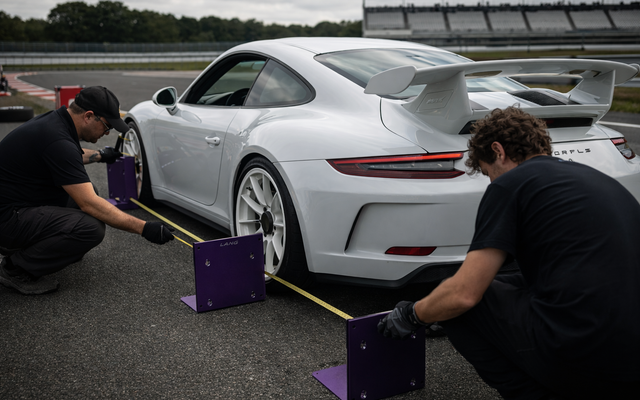
Once the fundamental parts is fitted, the subsequent essential stage in the project is the precise adjustment of the vehicle's wheel angles. This is the realm of car suspension tuning, a process that can seem overwhelmingly complex to the beginner but is, in fact, the secret to turning a assembly of capable pieces into a cohesive and controllable whole. The most critical element of tuning for oversteer is definitely camber. Camber angle is the inclination of the wheel compared to the perfectly straight line when viewed from the forward of the car. If the top edge of the wheel is leaning inward, this is referred to as negative camber. For sliding, an inward tilt on the front axle wheels is generally applied and is regarded as necessary. The purpose is deeply linked to physics.
When a vehicle is turning at high angles, the chassis leans to the outer of the bend. This chassis roll makes the outside steering tire to diminish its ideal grip area with the asphalt. By applying negative camber, the tire is pre-angled to account for this tilt. As the vehicle leans into the turn, the outside front tire gains a better contact patch on the track, increasing its traction at the exact time when it is most required for steering authority. Typically, front axle angles for a competition sliding vehicle fall between approximately -3 degrees to as high as -5 degrees or even greater, depending on the details of the chassis setup, tire choice, and operator preference. The rear axle tires also employ negative camber, but the angles are usually more conservative and less aggressive than the front axle. Excessive inward lean at the rear can cause the vehicle to excessively loose and difficult to control on throttle use, as it diminishes the usable tire footprint of the driven tires during forward throttle application. Therefore, rear angles are frequently in the ballpark of -1 degree to -3 degrees, achieving a careful equilibrium between giving sufficient cornering traction to assist in starting and sustaining the slide while simultaneously keeping good traction for acceleration the turn. Camber is only one part of the broader suspension geometry puzzle, which also includes toe, caster, and bump steer modification.
Toe angle is the orientation of the tires when looked at from above. Inward toe means the front edges of the wheels are nearer together than the rear edges, while negative toe means the reverse. For sliding, a slight amount of front toe out is commonly used to quicken the turn-in handling reaction, making the vehicle feel more agile and ready to start a oversteer moment. Rear toe angle is typically set to zero or a very minute amount of positive toe to encourage straight-line stability under throttle. caster angle is the frontwards or backwards tilt of the kingpin axis when looked at from the side-on of the car. Positive caster increases steering feel and high-velocity confidence, and it furthermore adds to inward lean gain during steering, which is extremely useful. Setting these values is a detailed interplay where a change to one setting can and often will affect the remaining parameters. The old-school process for dialing in a chassis's alignment for competition has for a long time been a tedious affair of experimentation and feeling. A tuner or team would apply a modification based on a hunch, drive the vehicle on track, use the driver's individual perception and impressions, and then introduce a drift tuning app further change. This cycle would repeat again and again until the chassis felt "acceptable" or the scheduled track session was exhausted. This approach is not only incredibly inefficient in terms of man-hours and costs, but it is additionally inherently imprecise.
Pilot perception is a notoriously unreliable data source, influenced by countless factors such as fatigue, evolving track surfaces, weather, and just the mindset of the pilot on that specific session. What feels "loose" on one run might feel "pushing" on the next lap, causing conflicting feedback and counterproductive adjustments. This age-old problem in car suspension tuning is precisely where contemporary engineering tools has made its mark to transform the process.
The development and adoption of specialized drift telemetry software has ushered in a new era for tuning and perfecting competitive drift cars. These tools, showcased by innovative systems like GripDial, operate by physically capturing the actual dynamic movement of the car as it is operated on the circuit. In contrast to relying on personal impression, these systems gather measurable metrics on essential parameters such as shock absorber movement, individual tire rotation, G-force loading, steering angle, and accelerator and brake pedal position. This raw telemetry is then analyzed by advanced algorithms that can visualize and decode the metrics in a comprehensible manner. For the very first time, drivers and builders can see specifically what the car is exhibiting at any given millisecond of a slide. This ability revolutionizes the whole suspension tuning process. Consider the specific task of setting the front negative camber for a given vehicle. Instead of introducing a modification from -3 degrees to -3.5 degrees and then running multiple laps to try and "perceive" a change, a vehicle dynamics tool can provide immediate and clear feedback. The application can indicate in a chart how the suspension's grip is performing during the critical stages of a angle: the initial flick, holding the angle, and changing direction. It can reveal if the existing angle is enabling the steering tire to keep drift suspension tuning guide ideal contact or if the rubber is over-stressed on its outer edge.
The system can then suggest fact-based advice for change. Perhaps the information reveals that the tire is even overworking its outer shoulder at -3.5 degrees of camber, implying that a move towards angle, say -4 degrees, might be advantageous. On the other hand, the data might indicate that the tire is failing to reaching temperature or that the inside shoulder is wearing unevenly, which could point to that there is excessive angle and a slight lessening back to -3.2 degrees would be better ideal. This standard of precision and practical intelligence was simply impossible in the time of pure manual tuning.
The impact of employing a comprehensive drift telemetry system extends far beyond only setting camber angles. It becomes an invaluable suspension tuning guide that is tailored to your exact vehicle. When adjusting the shock absorber clickers on your suspension, instead of depending on imprecise tips or mimicking another car's numbers, you can utilize the data to analyze how the car is performing in reaction to your adjustments. The software can show the damper movement trace over a run, showing if the shocks are controlling the chassis motion effectively or if they are allowing the vehicle to bounce excessively after a direction change. It can aid in pinpointing problems like excessive compression or excessive extension, enabling you to make data-backed decisions to preload settings, rebound/compression rates, or stance. This methodology extends just as well to the detailed task of car alignment tuning. Beyond camber angle, the software can give analysis into how changes to toe and caster angle are affecting the chassis's handling during different vehicle dynamics tool maneuvers of a lap. For instance, it can allow you to find the optimal amount of front negative toe for your specific steering geometry and piloting approach by analyzing the response time of turn-in reaction and the consistency of the car at maximum countersteer. This transforms the system an extremely effective drift suspension tuning guide that is constantly calibrated by the live behavior of your personal vehicle on the track. It moves the complete process from a mysterious craft into a repeatable engineering exercise.
Additionally, the application of a system like GripDial is in no way restricted to experienced engineers with vast budgets. For the amateur driver, it serves as an powerful equalizer. It practically offers the tuner with the analysis of a expert suspension specialist without needing the typical overhead. It drastically shortens the learning curve by providing definitive solutions to problems that would traditionally take countless track days of experience to solve. A driver can see how their particular chassis reacts to different settings, developing a deeper comprehension of suspension theory in the process. It also opens up professional suspension engineering concepts, allowing anyone with the ambition to perfect their vehicle to do so in a systematic and successful way. This is particularly important in a activity like drifting, where setup knowledge has traditionally been a tightly held asset among elite teams. Today, that capability can be in the toolkit of every dedicated builder.
In the final analysis, the path to engineering and dialing in the perfect championship-contending drift car is a comprehensive project that perfectly integrates proven engineering wisdom with cutting-edge telemetry technology. It commences with the wise selection of a capable chassis, then built upon the installation of critical drift-spec parts like high-performance steering angle kits and expertly specified competition adjustable dampers. The build then progresses into the precision realm of car suspension tuning, where settings like negative camber, toe, and caster angle are meticulously configured to match the car's modified hardware and the driver's individual technique. Ultimately, and what genuinely separates the contemporary methodology from the old ways, is the adoption of a advanced drift telemetry software. This tool eliminates the approximation and trial and error of only subjective tuning by providing empirical, actual telemetry on how the car is really performing. It acts as an incredible suspension tuning tool, a comprehensive coilover setup manual, and a master performance analyzer. In unison, this holistic approach guarantees that every aspect of the competition vehicle—from the choice of the chassis to the most minute adjustment on the suspension—is refined for ultimate performance on the track. It signifies the total evolution of the art of sliding, bridging physical pilot talent with data-informed vehicle setup to forge the most competitive cars imaginable.